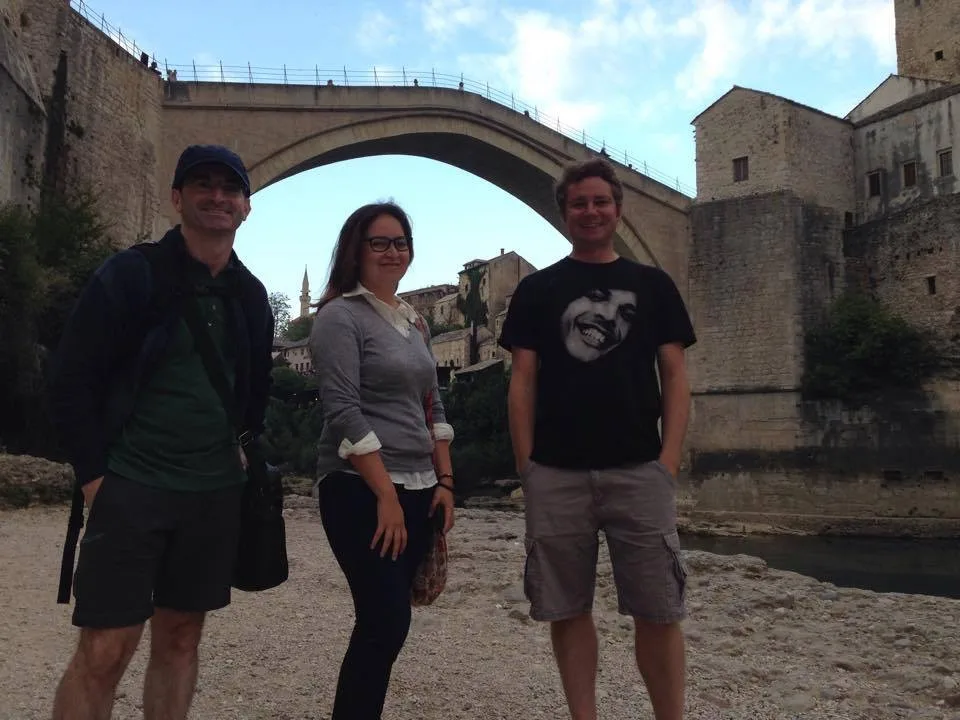
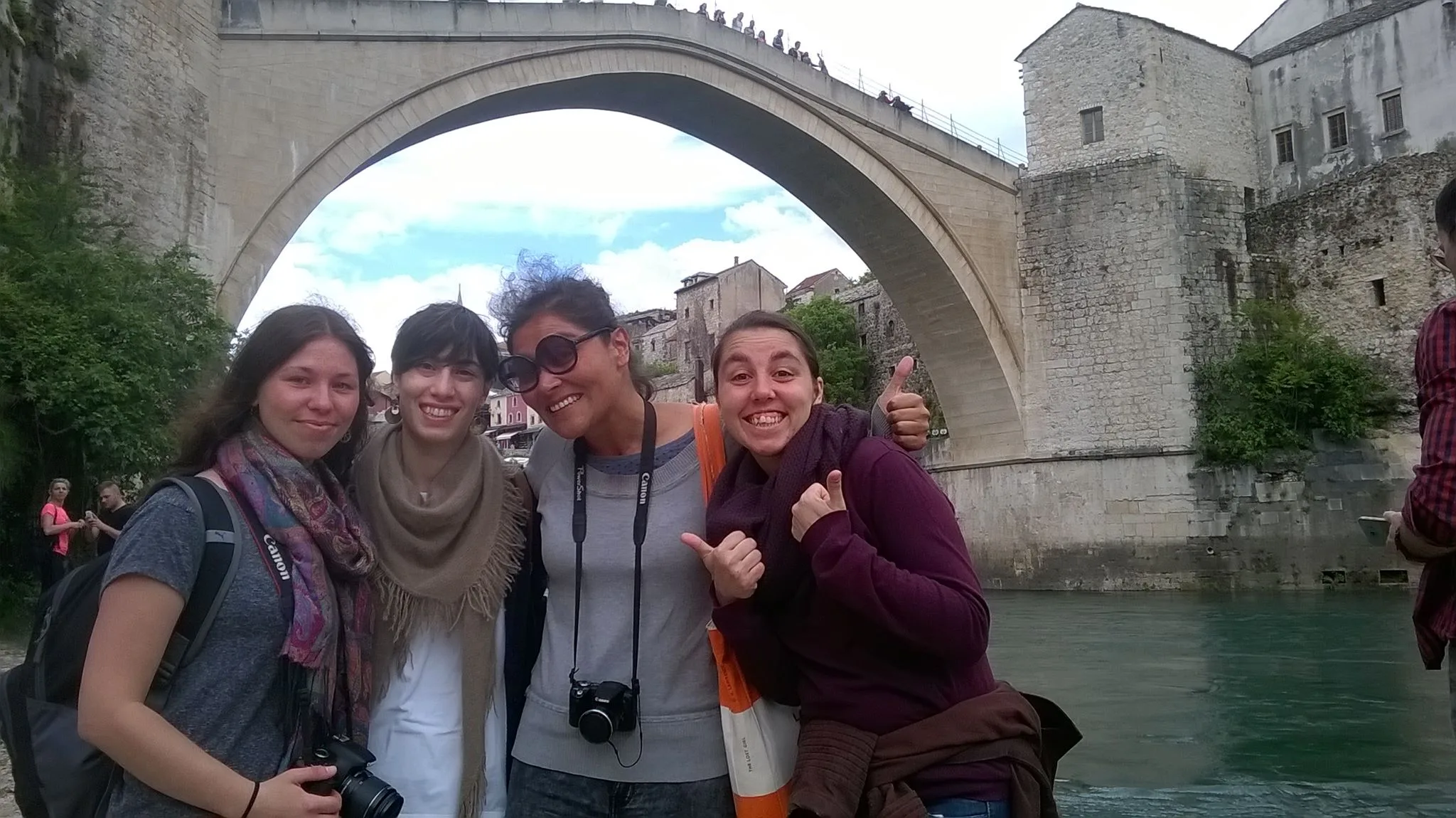
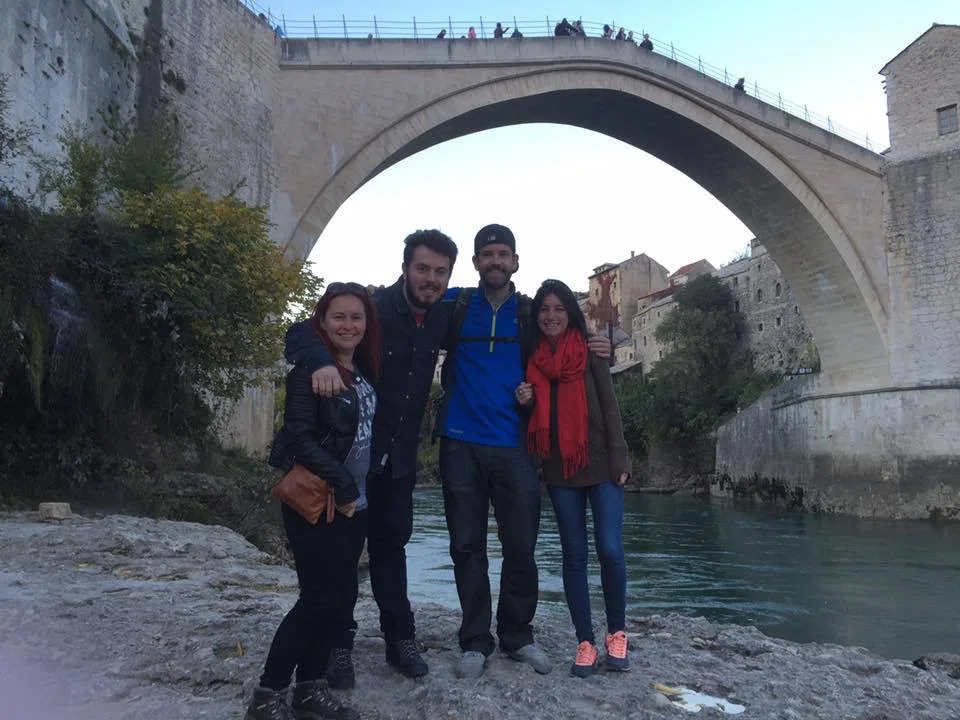
Standing on Stari Most, you can look left toward the Koski Mehmed Pasha Mosque and its minaret. You can look right toward the twin bell towers of the Franciscan church. Both are visible from the bridge. Both are standing. That fact — that both are still there — is not an accident, and it is not simply pretty architecture. It is a statement about what this city is and what it survived.
Who Are the Bosniaks?
The most common source of confusion for Western visitors is understanding who the different groups in Bosnia actually are. The short answer: Bosniaks, Croats, and Serbs are primarily distinguished by religion and historical-cultural identity, not by appearance, language, or ethnicity in any biological sense.
All three groups speak variants of what is essentially the same South Slavic language — referred to as Bosnian, Croatian, or Serbian depending on political context, with only minor differences. They are, physically, the same people with the same roots.
The differences are primarily:
- Bosniaks — Muslim by heritage (though not necessarily by practice), descendants of Slavic people who converted to Islam during the Ottoman period. The Bosniak national identity is distinct from Arabic, Turkish, or Middle Eastern Muslim identity. Bosnian Islam has historically been characterised by a tolerant, moderate character.
- Bosnian Croats — Catholic by heritage, culturally and politically connected to Croatia. In Herzegovina, Croats have historically formed a significant minority that is, in some areas, a local majority.
- Bosnian Serbs — Serbian Orthodox Christian by heritage. In Mostar specifically, Serbs form a small minority since the Dayton Agreement reorganised the city's demographics.
An Important Clarification
These are heritage identities, not necessarily personal religious practice. Many Bosniaks drink alcohol and don't pray five times a day. Many Bosnian Croats rarely attend church. The religious label is primarily a marker of community identity, not personal devotion — though of course individual practice varies enormously.
The Ottoman Legacy: What 400 Years Really Leaves Behind
The Ottoman Empire ruled most of Bosnia and Herzegovina from 1468 to 1878 — approximately 410 years. That is a very long time. The Ottoman system didn't erase local culture; it reorganised it through the millet system, which allowed different religious communities (Muslim, Christian, Jewish) to maintain their own legal and social structures under Ottoman political authority.
This meant that for four centuries, Mostar's communities lived in close proximity, trading together, occasionally intermarrying, while maintaining distinct religious identities. The city that emerged was genuinely multicultural — not as a political ideology, but as a practical reality of daily life.
The physical legacy of Ottoman Mostar is visible in the east bank of the Neretva: stone streets, hans (caravanserais), mosques, and the bazaar. The western bank absorbed Austro-Hungarian influence from 1878 — wider streets, European facades, coffee houses. Two architectural vocabularies meeting at the water.
What Coexistence Looks Like in Practice (Today)
This is where visitors most often have romantic expectations that deserve gentle correction.
Mostar is not a model of post-conflict reconciliation. It is not a cautionary tale of irreconcilable division. It is something more complicated and more interesting: a city where people share space, share commerce, share cafes and sunsets, but have not yet resolved the fundamental political questions about how to share power and raise children.
At street level: people from both communities walk the same old town, buy coffee from the same shops, swim in the same sections of the Neretva in summer. The hospitality directed at tourists crosses all community lines completely — you will be welcomed by Bosniaks and Croats alike, without question or caveat.
At the institutional level: the city has functioned with a divided school system, divided political representation, and periodic deadlock. In 2020, Mostar held its first local election in 12 years — a full decade of political gridlock resolved only under international pressure.
Visiting Mosques: Practical Etiquette
Mostar's old town mosques — primarily the Koski Mehmed Pasha Mosque and the Old Bazaar mosque — welcome respectful visitors outside of the five daily prayer times. Here is what you need to know:
- Remove shoes before entering and place them at the entrance
- Women should cover their heads and shoulders (scarves are usually available at the entrance; a light scarf in your bag is ideal)
- Dress modestly — arms and legs covered
- Keep voices low and phones on silent
- Photography is generally permitted in tourist mosques, but not during active prayer times
- A small donation (1–2 KM) at the entrance is appreciated
- Do not enter the prayer space if prayers are in progress — wait or come back
Visiting Catholic Churches
The Franciscan Church of Saints Peter and Paul on the west bank — with its striking 107-metre bell towers — is the most visible Catholic landmark in Mostar. The Franciscan order played a specific role in maintaining Catholicism in Herzegovina during the Ottoman period and remains culturally significant.
The church is generally open to visitors. Standard church etiquette applies: modest dress, quiet behaviour, no photography during mass.
The Question Tourists Ask But Often Can't Articulate
Somewhere around the middle of most of our tours, a guest will ask — usually carefully, trying to phrase it without giving offence — something like: "Do people here actually get along?"
The honest answer is: most of the time, most of them do, in the ways that matter most for daily life.
People in Mostar are not walking around in a state of suppressed rage. They're drinking coffee, arguing about football, worrying about their children's futures, complaining about the government (all sides, equally, find the government frustrating), and occasionally falling in love across community lines.
What is missing is political resolution. The grievances from the war have not been officially addressed in ways that most people on both sides feel are adequate. The institutional division entrenches separation at the level where it matters most — education — without creating obvious pathways toward integration.
This is not hopeless. It is complicated. And complexity, in this particular city, is the most honest thing we can offer you.
Ask Your Guide
On our tours, you can ask about this directly. We won't give you a diplomatic non-answer. We'll tell you what daily life actually looks like, what the specific political disagreements are, and what we — as someone who grew up here — actually think about the prospects for the city's future. No tour script required.
Myths vs. Reality About Bosnia
Myth
"Bosnia is dangerous for tourists."
Reality
Bosnia is safe for tourists. Political tensions are not street-level dangers. Violent crime rates are low. The risk you face in Mostar is sunburn, not violence.
Myth
"Everyone in Bosnia is deeply religious."
Reality
Bosnia has strong secular traditions. Many Bosniaks drink alcohol; many Croats rarely attend church. Religious identity is primarily cultural and historical, not prescriptive.
Myth
"People hate each other. The war never really ended."
Reality
The war ended. People share the city. There is political disagreement that is structural and ongoing. These are different things. Not hostility — but unfinished business.
Myth
"Bosnian Islam is like Middle Eastern Islam."
Reality
Bosnian Islam has 550 years of European development and is culturally distinct. The call to prayer and the kafana are both Mostar traditions. They coexist without contradiction.
Experience This In Person
Our Cultural Experience tour covers everything on this page and more — with the specific stories, specific places, and the specific local perspective that a written guide can only gesture at.
Book the Cultural Tour