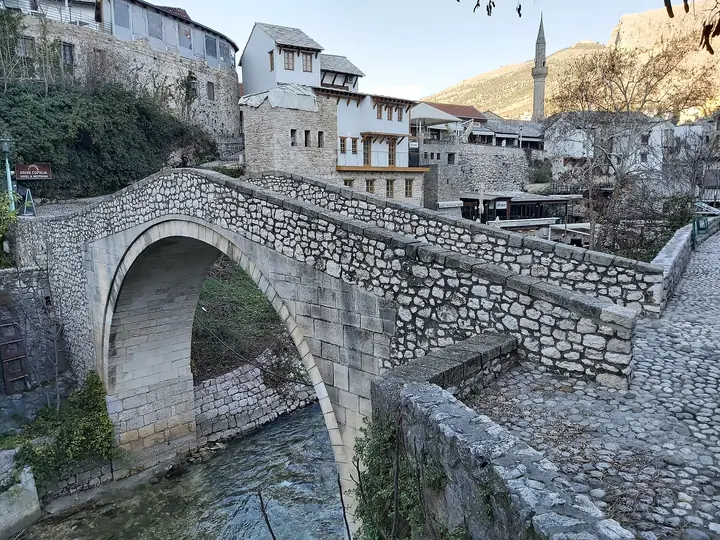
A city where the past is still visible
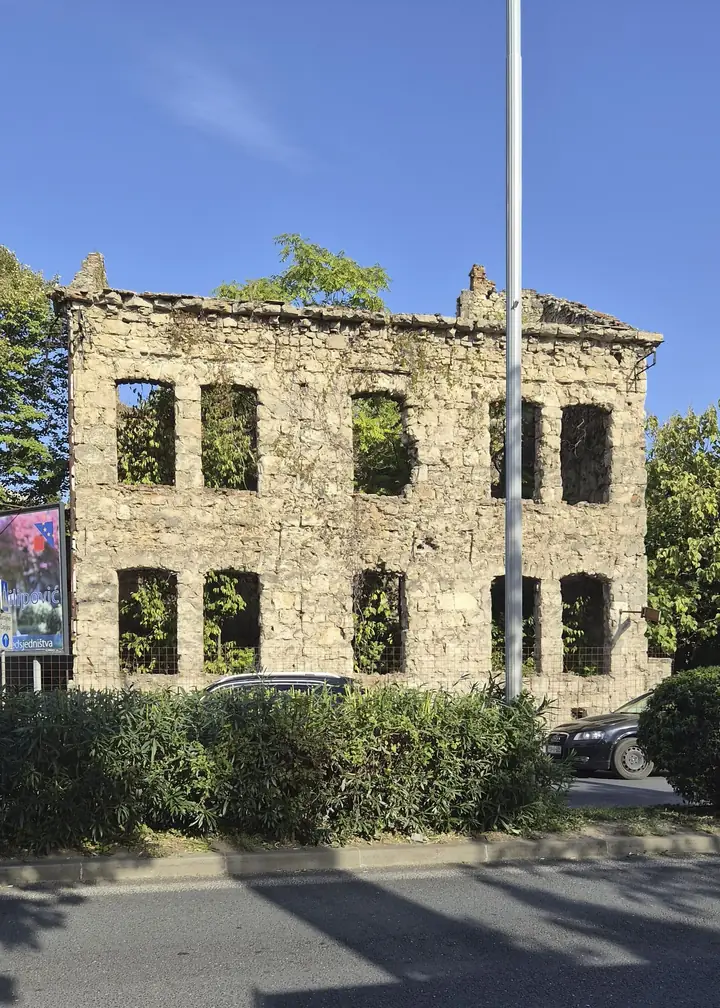
Mostar is beautiful, and most visitors see that within an hour. What takes longer to notice is how close the 1990s still are. There are shrapnel marks on facades a few streets from the bazaar. There are buildings on the old front line that nobody has repaired. Most children in the city are still taught in separate Bosnian- and Croatian-curriculum schools, and even the shared Mostar Gymnasium runs two curricula under one roof.
The people you meet here lived through this, or grew up in what it left behind. None of that should stop you coming. It is simply worth knowing before you arrive, and it explains most of the advice on this page.
Where your money goes
My walking tours are free to join and paid for with tips. I run them myself and you book directly with me through this site, so when you tip at the end, the money goes straight to me, the guide who has just spent about 90 minutes showing you my city. There is no agency in between. Most guests give €10 to €15 per person, which is roughly 20 to 30 KM, but the tour is yours to judge.
The same idea works for the rest of your stay. The old town is full of small, family-run guesthouses and places to eat. When you have the choice, book a room directly with the owner, eat where the family is cooking, and buy things from the person who made them. More of what you spend stays in Mostar that way.
Visiting war sites with care
Coming to understand what happened in a place, and taking it seriously, is a good reason to travel. There is a difference, though, between bearing witness and treating someone else's worst years as scenery.
- Bearing witness means learning what happened, giving it the weight it deserves, and leaving with a clearer picture than you came with.
- Voyeurism means using shell damage as a backdrop, posing in ruins, or treating survivors' memories as a show.
A few practical points. Ruined buildings are unsafe, so look at them from the street and do not climb inside. At cemeteries and memorials, keep your voice down and stay on the paths. In mosques and churches, cover your shoulders and knees. And if you head out of town for a hike, stay on paved roads and marked paths: some rural areas of Bosnia and Herzegovina still contain landmines from the war.
Photography and people
My photography guide covers the best spots and times of day. The rule that matters most is short: ask before you photograph someone. The people who live here are going about their day, and they are not extras in your trip. A gesture and a smile are usually enough to ask. If someone says no, put the camera down and move on.
Take extra care with anything that marks a loss: a gravestone, a memorial plaque, a family's damaged house. Photographing it is fine. Turning it into a selfie usually is not.
Thinking twice about war souvenirs
Some shops sell wartime items such as engraved shell casings and insignia. Some of these are reworked or made for the tourist trade rather than being genuine relics. Think about what you are buying and why.
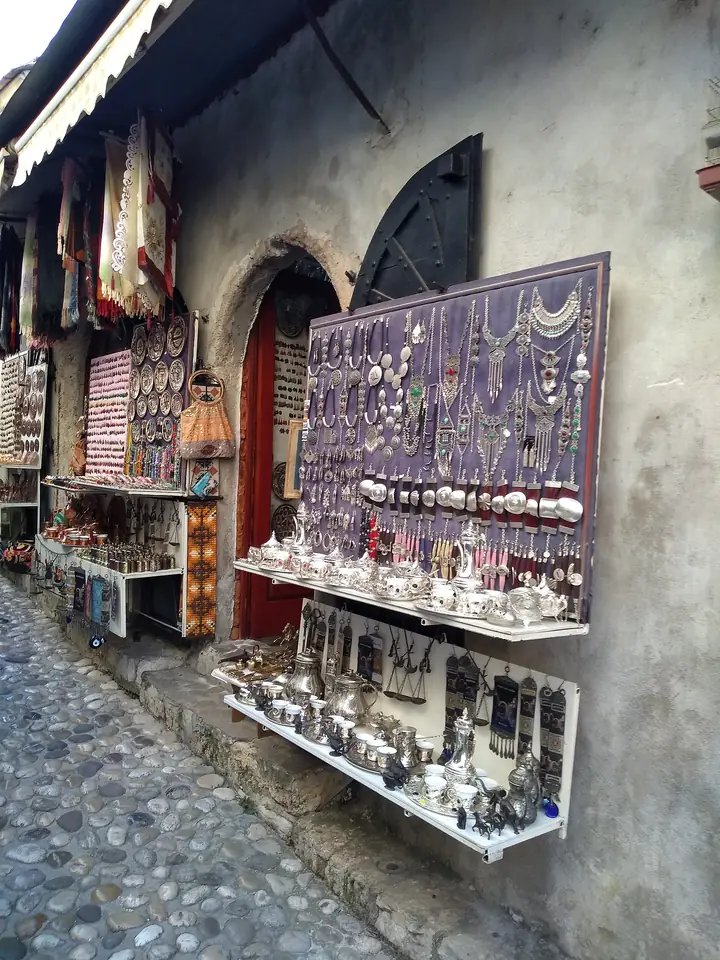
Many visitors prefer souvenirs made by Mostar's craftsmen: hand-beaten copper, Bosnian coffee sets, local food and handmade textiles. You will find many of them in the shops along Kujundžiluk, the old bazaar street.
Looking after Kravice
The Kravice waterfalls, south-west of Mostar, drop around 28 metres over a wide curve of tufa into a green pool. Tufa is a soft rock that the river builds up slowly, and it breaks easily. The park gets very busy in summer, and with that many visitors, small habits add up.
- Stay on the paths and do not climb on or break the tufa.
- Take your rubbish home with you. Littering is against the park rules.
- Swimming in the pool below the falls is allowed in summer, at your own risk. The water is cold and deep, and there may be no lifeguard.
- If you do swim, consider a mineral sunscreen.
- Watch for falling tufa rock near the falls, which the park itself warns about.
Talking about the war
In April 1992 the Yugoslav People's Army (JNA) and Bosnian Serb forces began shelling Mostar, until Croat and Bosniak fighters together pushed them out in June. In May 1993 fighting broke out between the Bosnian Croat HVO and the Army of the Republic of Bosnia and Herzegovina (ARBiH), and the city was split along a front line. The ICTY later found that the HVO besieged East Mostar from June 1993 to April 1994. Catholic, Orthodox and Muslim places of worship were destroyed during the war, and families from every community lost people. The full story is in my guide to the war in Mostar.
Because of that, people here have very different and very personal relationships with those years. Some like to talk about it. Some would rather not. Some will tell you things that surprise you or make you uncomfortable. You do not have to agree or argue. Listening is the right way in, and it is usually better to let someone raise the subject than to start with it yourself.
On a tour, though, ask me whatever you like. Direct questions about what happened, and what I think about it, are exactly what my tours are for. I will answer as honestly as I can.
How I try to run my tours
- You book with me directly, and your tip goes to me, the person who guided you.
- I tell the history honestly, including the parts that are uncomfortable for any one community.
- I point guests towards family-run places to eat, stay and shop, and away from tourist traps.
- I treat guests as adults who can handle difficult history, and I give them the facts to make up their own minds.