Free · about 1.5 hours
Mostar War History Tour
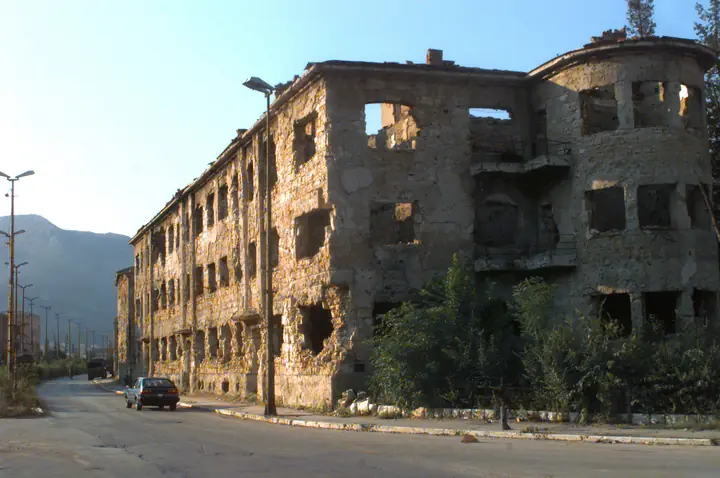
The 1990s in Mostar: the two sieges, the front line on the Bulevar, the fall of the bridge, and the city that came after.
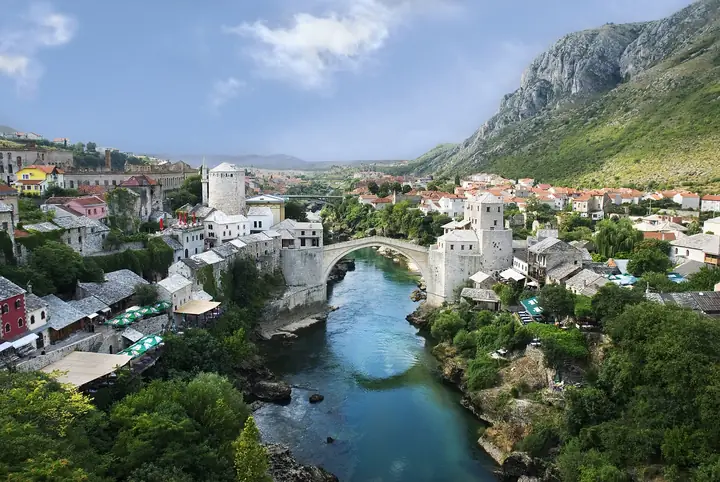
An hour and a half through old Mostar with a local guide: the bridge, the bazaar street, the mosques and the river, and the stories that explain them. Free to join. At the end you tip what you think it was worth.
Mostar exists because of a river crossing. The town even takes its name from the mostari, the bridge keepers who guarded a crossing over the Neretva long before the stone bridge was finished in 1566. This walk is the story of that crossing and of the Ottoman town that grew around it.
You will see the places every visitor sees, but with the context that makes them make sense: why the bridge was built as one daring arch, why the bazaar street looks the way it does, why there are minarets on one side of the river and church towers on the other, and what it meant to people here when the bridge fell in 1993 and rose again in 2004.
The walk goes through the historic centre. The exact route depends on the day, the crowds and your questions, and if there is a place you especially want to see, tell me when you book.
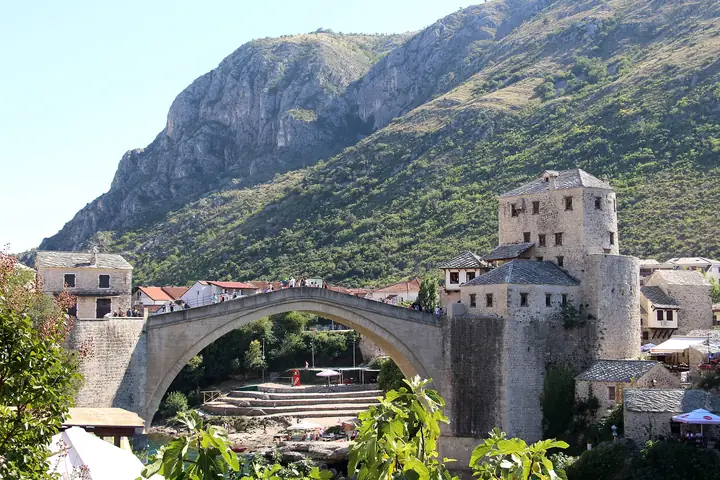
Designed by the Ottoman architect Mimar Hayruddin and finished in 1566, a single stone arch of about 29 metres over the river. We talk about how it was built, the divers who jump from it, how it was destroyed on 9 November 1993 and how it was rebuilt and reopened on 23 July 2004. The old bridge area has been a UNESCO World Heritage site since 2005.
The two stone towers that guard each end of the bridge, built when the Ottomans fortified the crossing in the 16th century.
The old bazaar street, named after the goldsmiths who once worked here and today lined with copper workshops, carpets and cafés. A good place to understand how an Ottoman market street worked, and which shops are worth your money.
A small bridge over the Radobolja stream, traditionally dated to 1558 and often called a miniature of the Old Bridge. Floods carried it away in December 2000; it was rebuilt in 2001.
We pass the Koski Mehmed Pasha Mosque and the stone lanes around it and talk about faith in Mostar. Entry to the mosque, its minaret and the museums is paid and not part of the free walk; I tell you which are worth it.
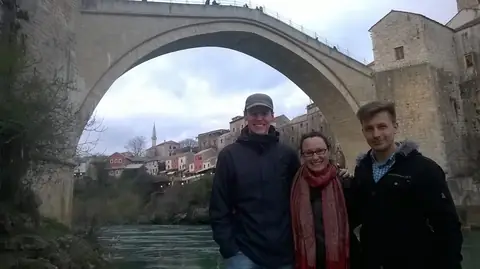
The walk ends on the river bank below the Old Bridge, where most of the group photos on this site were taken. Ask for one; it is the best view of the arch.
We meet at Swimming Club Orka, near the Carinski bridge, at the time agreed by email. From there it is about 10 to 15 minutes on foot to the old town, and the history starts on the way. The pace is easy, with stops in the shade, and you can interrupt with questions at any point. Guests often say it felt like a conversation, and that is how I like it.
At the end, you tip what you think the tour was worth. Tips are how the walking tours are paid for, so if the walk was good, it shows.
Before you come, you may like the history of Mostar and a plan for one or two days in Mostar.
Real Google reviews, word for word.
Read All Reviews“[The guide] is on a totally new level when it comes to being a tour guide. His knowledge, his way of speaking , his attention, his perfect English, his way to adapt and answer any question given is amazing! I've been to many tours since I love to travel, but this guy is something else.”
Read on Google“A fantastic experience for my sister and me on this guided walking tour of Mostar. [The guide] shared historical facts and personal anecdotes with us in a very transparent way, giving us a different perspective on Mostar and the country's history. We also learned about the local culture and the daily lives of Mostar's inhabitants. [The guide] is very approachable and answered all our questions :) Highly recommended!!!”
Read on Google“Excellent tour with [the guide]. He's very knowledgeable about the old and recent history of Mostar having lived through recent events. Perfect English and provided excellent tips on where to shop and eat based on our preferences. He definitely deserves a generous tip for his hard work and enthusiasm”
Read on Google“A very interesting, passionate, and engaging guide! He brings a personal perspective to the tour, making it all the more interesting. We learned a great deal about Mostar and Bosnia and Herzegovina. It wasn't a monologue but a dialogue; he answered all our questions. He takes the time, even for small groups (we were only two). We highly recommend this free tour. A beautiful message of peace.”
Read on Google“This was an excellent tour by a local who explained current Bosnia really well as as giving first hand accounts of the war in the 1990s. He was really friendly and knows the city very well.Highly recommended!”
Read on Google“Great guide who knew all the interesting parts about Mostar and Bosnia. Friendly, personal and interactive. He answered all my questions well and I learned a lot. Highly recommend!”
Read on GoogleBefore you book.
Yes. There is nothing to pay when you book or when we start. At the end you tip what you think the walk was worth, in cash. Most guests give €10 to €15 per person (about 20 to 30 KM), and if money is tight you are still welcome.
There is no fixed timetable. Choose a day in the booking form (write a preferred time in the message if you have one), and I reply by email to agree the exact time.
Yes. Each walk takes about an hour and a half, so two in one day is comfortable. Say so in the booking message and I will suggest times that fit.
No. Places with an entrance ticket, such as the Koski Mehmed Pasha Mosque and its minaret, the old Ottoman houses and the museums, are not part of the free walk. I am happy to recommend them, and if you tell me in advance that you want to see a particular place, I can plan the route around it.
Yes, the pace is easy. The old town is paved with polished limestone that is uneven and slippery in places, so good shoes help. If you use a wheelchair or have limited mobility, write before booking so I can plan the route with you.
The walk goes ahead in light rain. If the weather is really bad, I will email you to move it.
The 1990s in Mostar: the two sieges, the front line on the Bulevar, the fall of the bridge, and the city that came after.
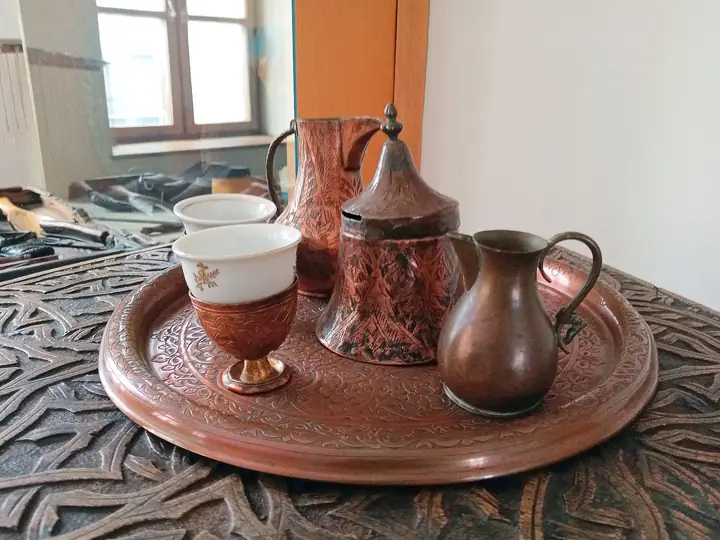
Bosnian coffee, the copper street, mosques and churches a few hundred metres apart, and what daily life here is really like.
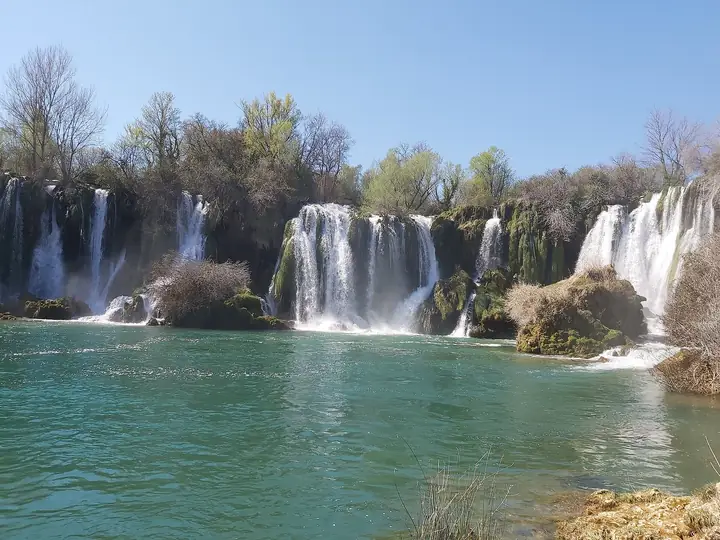
The Kravice waterfalls, the Blagaj dervish house and the stone town of Počitelj in one day, in your own air-conditioned car.
Choose a day and book in one step. You get a confirmation by email straight away.