Free · about 1.5 hours
Mostar Historic Walking Tour
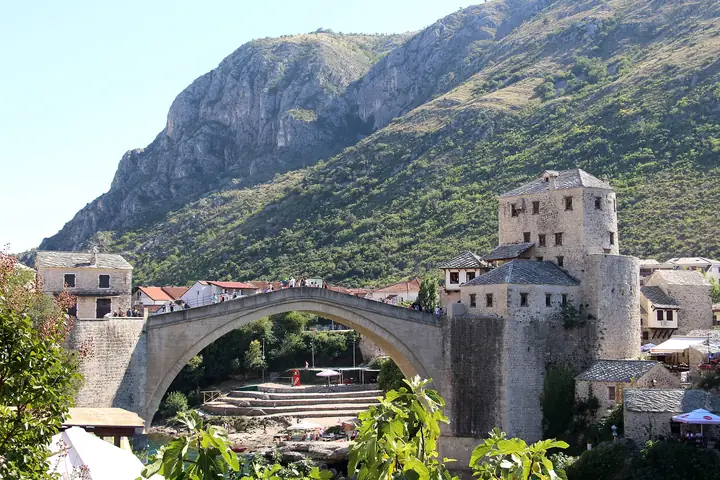
The Old Bridge, the bazaar street and the Ottoman town, and why the bridge matters so much to the people who live here.
An hour and a half along the old front line and down to the Old Bridge with a local guide: two wars in two years, a city split in half, and what living in Mostar is like now. Careful, and open to every question.
Most visitors to Mostar see the Old Bridge, take a photo and leave without knowing why the bridge had to be rebuilt, or why the city still has two school systems and, for twelve years, had no local elections. This walk is for people who want to understand.
I grew up in Mostar in the years the war shaped. I tell it plainly: what happened, who fought whom and when, and how the city lives with it today. I don’t tell it to shock anyone, and I don’t tell it as one side’s story.
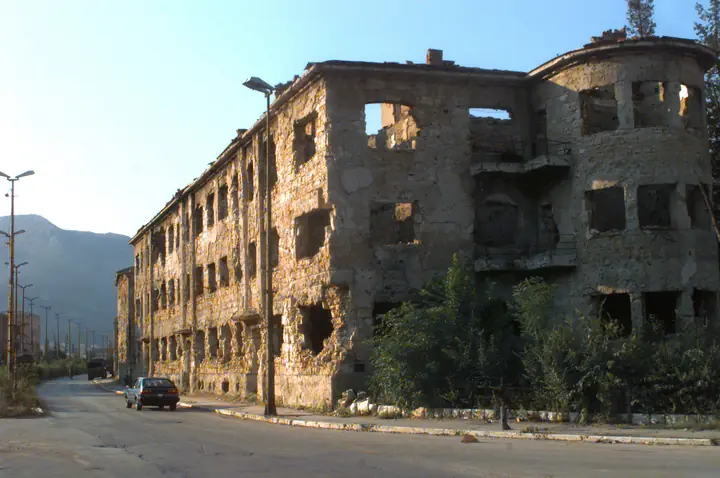
The wide street that became the front line in 1993. Some buildings still carry the damage; others have been rebuilt. Standing here explains the geography of the war better than any map.
Named in honour of the Spanish peacekeepers who served in and around Mostar, some of whom lost their lives here.
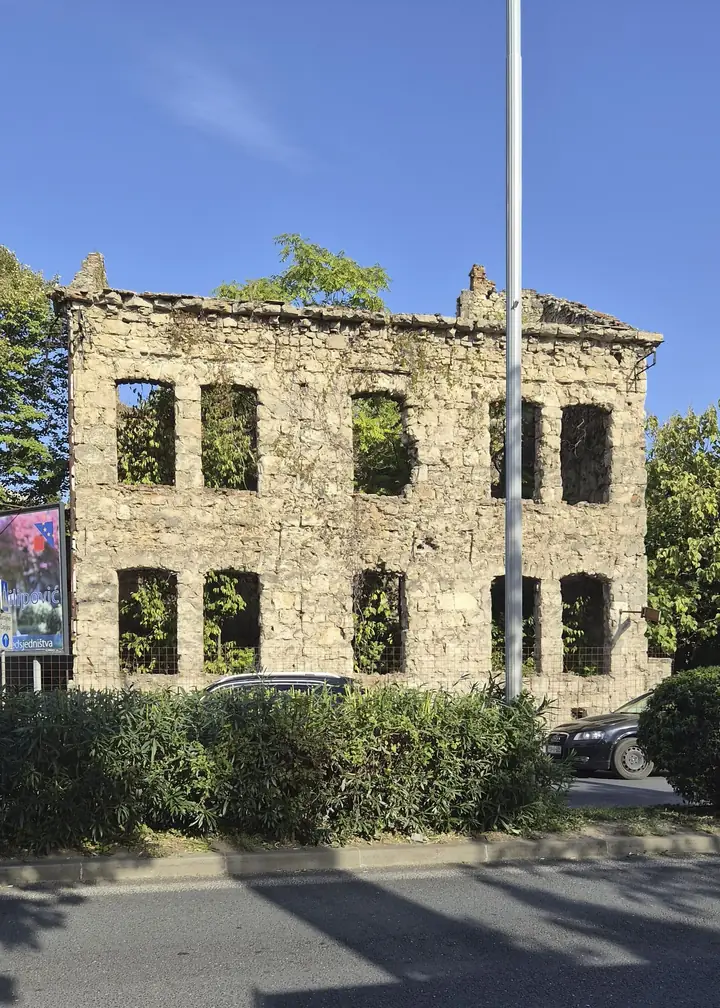
A former bank building on the front line, used by snipers during the war and left as a ruin. We look at it from the street; please don’t go inside, it is unsafe.
Why the bridge mattered so much to people of every background, how and why it was destroyed, what the courts later said about it, and how it was rebuilt with local stone and the original techniques, reopening on 23 July 2004.
Two curricula under one roof at the Mostar Gymnasium, politics that still follow the lines of the war, and the ordinary friendships and marriages that cross them. Ask me anything.
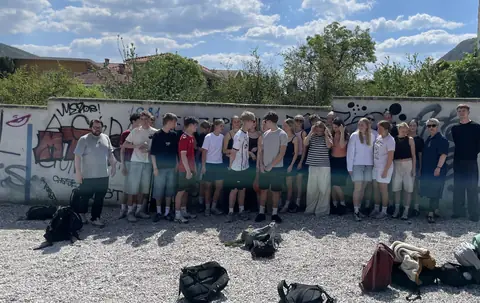
We meet at Swimming Club Orka, near the Carinski bridge, at the time agreed by email, and walk from there. The pace is gentle and there are stops to sit. Some moments are heavy, and there is always time to pause, ask or just look.
The tour is in English. It ends at the Old Bridge, so you can stay in the old town afterwards. If you also want the Ottoman history of the bridge and the bazaar, take the historic walking tour on the same or the next day.
If you like to arrive prepared, start with the war in Mostar, 1992 to 1995, then how to visit a place that remembers.
Real Google reviews, word for word.
Read All Reviews“[The guide] is on a totally new level when it comes to being a tour guide. His knowledge, his way of speaking , his attention, his perfect English, his way to adapt and answer any question given is amazing! I've been to many tours since I love to travel, but this guy is something else.”
Read on Google“A fantastic experience for my sister and me on this guided walking tour of Mostar. [The guide] shared historical facts and personal anecdotes with us in a very transparent way, giving us a different perspective on Mostar and the country's history. We also learned about the local culture and the daily lives of Mostar's inhabitants. [The guide] is very approachable and answered all our questions :) Highly recommended!!!”
Read on Google“Excellent tour with [the guide]. He's very knowledgeable about the old and recent history of Mostar having lived through recent events. Perfect English and provided excellent tips on where to shop and eat based on our preferences. He definitely deserves a generous tip for his hard work and enthusiasm”
Read on Google“A very interesting, passionate, and engaging guide! He brings a personal perspective to the tour, making it all the more interesting. We learned a great deal about Mostar and Bosnia and Herzegovina. It wasn't a monologue but a dialogue; he answered all our questions. He takes the time, even for small groups (we were only two). We highly recommend this free tour. A beautiful message of peace.”
Read on Google“This was an excellent tour by a local who explained current Bosnia really well as as giving first hand accounts of the war in the 1990s. He was really friendly and knows the city very well.Highly recommended!”
Read on Google“Great guide who knew all the interesting parts about Mostar and Bosnia. Friendly, personal and interactive. He answered all my questions well and I learned a lot. Highly recommend!”
Read on GoogleBefore you book.
It deals with war, death and loss, explained calmly and without graphic detail. Teenagers usually find it very meaningful. For younger children, the historic walking tour may suit better; use your judgement, and ask me if you are unsure.
No. Many guests arrive knowing almost nothing about the Bosnian war, and the walk starts from the beginning. If you would like to read first, the guide to the war in Mostar on this site is a good start.
No. Every community in Mostar lost people and homes in the 1990s. The tour explains who fought whom and when, using the findings of the international war crimes tribunal in The Hague, and leaves room for your own questions and conclusions.
No. The building is a ruin and entering it is unsafe. We look at it from the street, which is where its story is best told anyway.
Yes. Book a day, walk, and at the end tip what you think the tour was worth. Most guests give €10 to €15 per person (about 20 to 30 KM).
The Old Bridge, the bazaar street and the Ottoman town, and why the bridge matters so much to the people who live here.
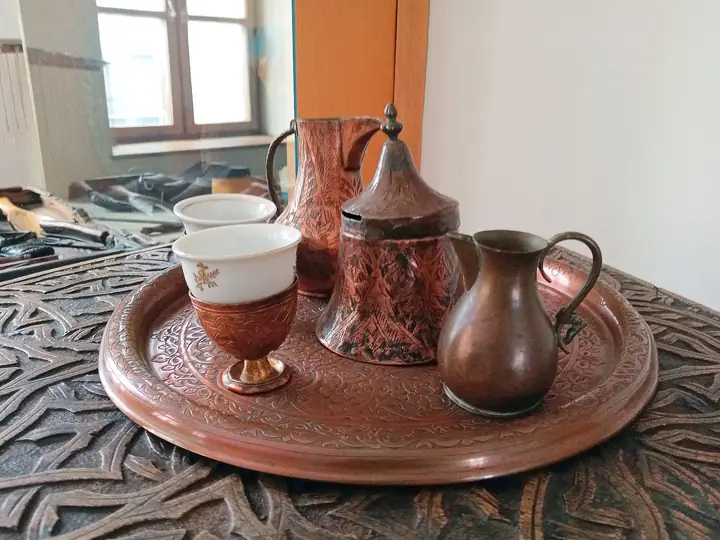
Bosnian coffee, the copper street, mosques and churches a few hundred metres apart, and what daily life here is really like.
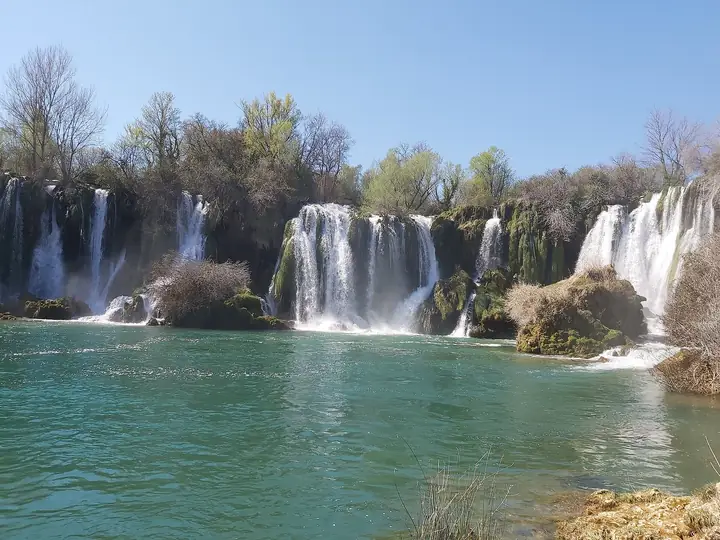
The Kravice waterfalls, the Blagaj dervish house and the stone town of Počitelj in one day, in your own air-conditioned car.
Choose a day and book in one step. You get a confirmation by email straight away.