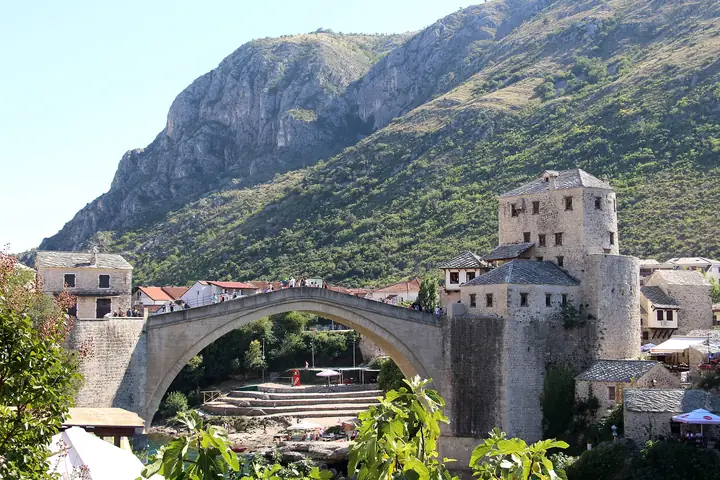
Free · about 1.5 hours
Mostar Historic Walking Tour
The Old Bridge, the bazaar street and the Ottoman town, and why the bridge matters so much to the people who live here.
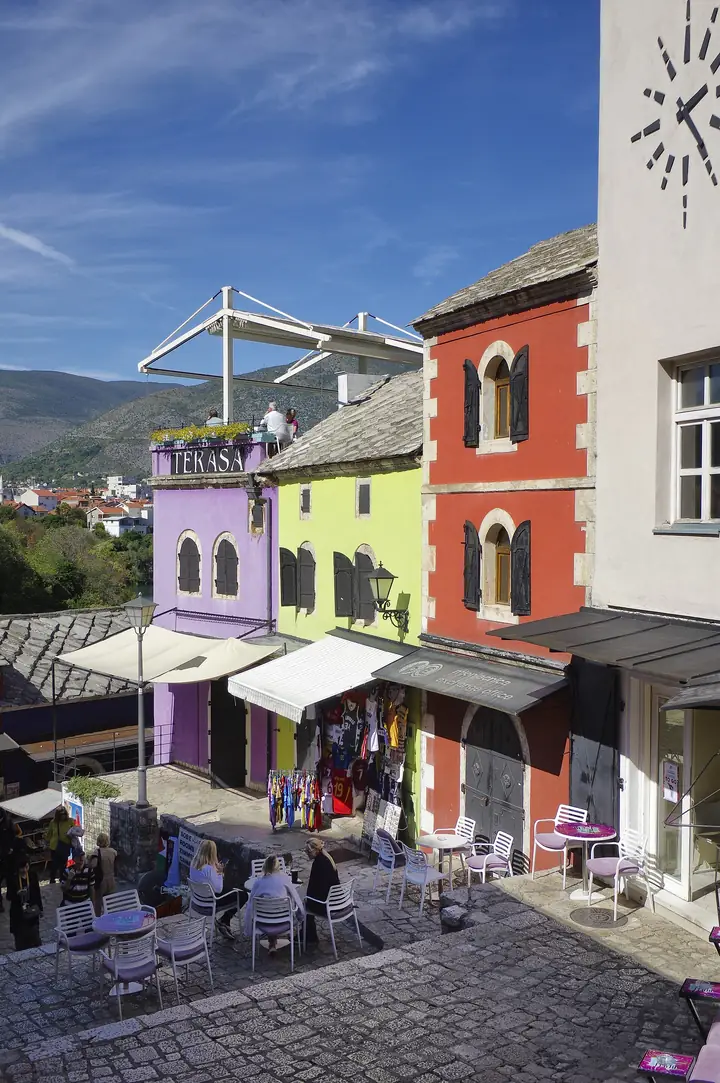
An hour and a half with a local guide about the people rather than the monuments: how Bosnian coffee is drunk, what the copper street makes, why a mosque and a church tower face each other across the river, and what daily life here is really like.
You can learn Mostar’s dates from a plaque. What a plaque cannot tell you is how a Bosnian coffee is drunk slowly on purpose, why people here still say they are “going for a coffee” when they mean an hour of conversation, or how it feels to live in a city where the call to prayer and church bells reach the same street.
This walk is about that side of Mostar. We walk through the old town, stop where people actually stop, and talk about faith, food, family, work and politics, in plain words and with room for your questions.
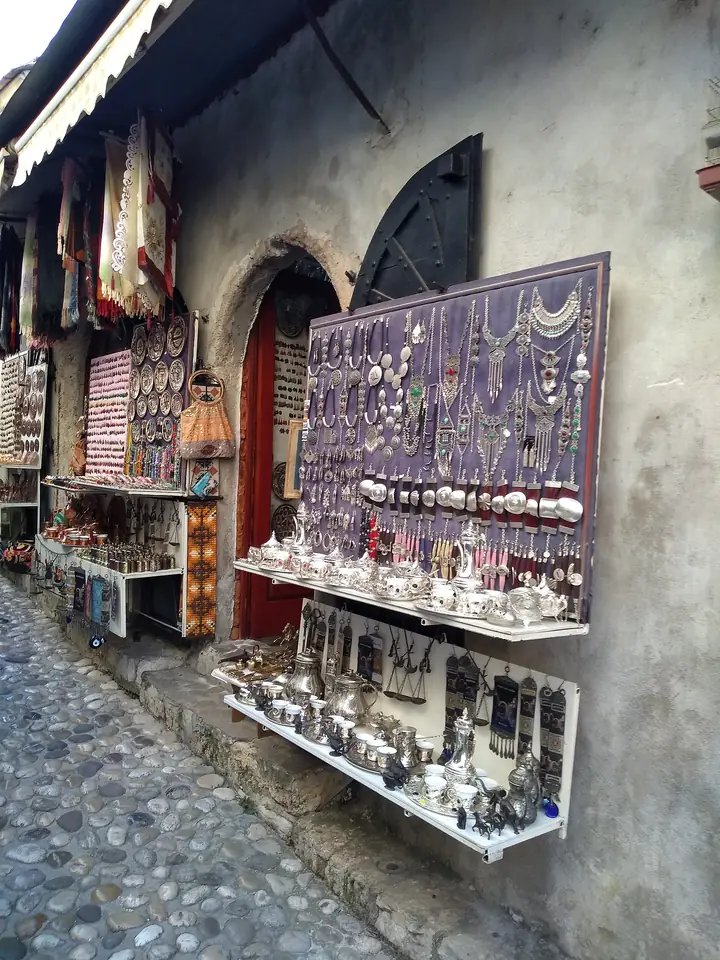
In Kujundžiluk, craftsmen still hammer and engrave copper by hand. We look at what is made here and how to tell handwork from imports.
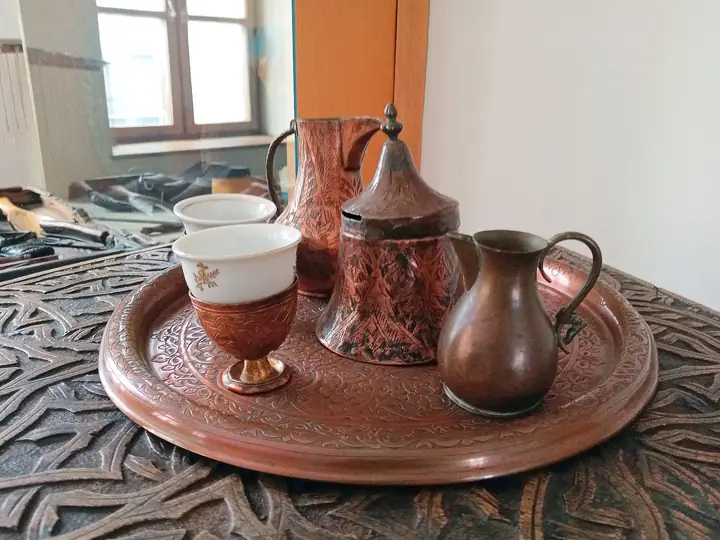
Ground fine, boiled in a džezva, poured into small cups, with a sugar cube on the side and often a piece of rahat lokum. Many locals dip the sugar, bite it and let it melt while they sip. It is not Turkish coffee, and people here will tell you so.
From the river you can see minarets on one side and the 107-metre bell tower of the Franciscan church, the tallest in the country, on the other. Both the mosque and the church were destroyed or badly damaged in the war, and both have been rebuilt. We talk about what that says about the city.
Bosniaks, Croats and Serbs share largely the same origins and mutually intelligible languages, and were historically distinguished mainly by religious heritage. You cannot tell them apart by looking. Religious practice ranges from devout to entirely secular in every community.
Schools, jobs, young people leaving and coming back, football, weddings, and where locals actually eat. The answers are more ordinary and more interesting than the headlines.
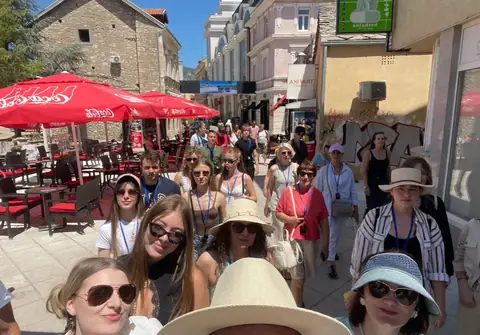
We meet at Swimming Club Orka, near the Carinski bridge, at the time agreed by email. The walk is easy and slow, with time to sit. It is in English, and at the end you tip what you think it was worth.
For more on food, read the food and coffee guide; for faith and identity, culture and coexistence in Mostar.
Real Google reviews, word for word.
Read All Reviews“[The guide] is on a totally new level when it comes to being a tour guide. His knowledge, his way of speaking , his attention, his perfect English, his way to adapt and answer any question given is amazing! I've been to many tours since I love to travel, but this guy is something else.”
Read on Google“A fantastic experience for my sister and me on this guided walking tour of Mostar. [The guide] shared historical facts and personal anecdotes with us in a very transparent way, giving us a different perspective on Mostar and the country's history. We also learned about the local culture and the daily lives of Mostar's inhabitants. [The guide] is very approachable and answered all our questions :) Highly recommended!!!”
Read on Google“Excellent tour with [the guide]. He's very knowledgeable about the old and recent history of Mostar having lived through recent events. Perfect English and provided excellent tips on where to shop and eat based on our preferences. He definitely deserves a generous tip for his hard work and enthusiasm”
Read on Google“A very interesting, passionate, and engaging guide! He brings a personal perspective to the tour, making it all the more interesting. We learned a great deal about Mostar and Bosnia and Herzegovina. It wasn't a monologue but a dialogue; he answered all our questions. He takes the time, even for small groups (we were only two). We highly recommend this free tour. A beautiful message of peace.”
Read on Google“This was an excellent tour by a local who explained current Bosnia really well as as giving first hand accounts of the war in the 1990s. He was really friendly and knows the city very well.Highly recommended!”
Read on Google“Great guide who knew all the interesting parts about Mostar and Bosnia. Friendly, personal and interactive. He answered all my questions well and I learned a lot. Highly recommend!”
Read on GoogleBefore you book.
No, the walk is free and so nothing is included, but there is time to sit down for a Bosnian coffee if you want one, and I will show you how it is drunk. A coffee in the old town costs a few marks.
We pass both and talk about them. Paid sights such as the Koski Mehmed Pasha Mosque are not part of the free walk, but I am happy to recommend them. For any mosque, shoulders and knees should be covered.
No. It is about how people of different faiths and of none live side by side in one small city, told with respect for all of them.
For a first visit, the historic walking tour gives the widest picture. Choose this one if you are more curious about people, food and faith than about dates.
Yes. Book a day, walk, and at the end tip what you think the tour was worth. Most guests give €10 to €15 per person (about 20 to 30 KM).
The Old Bridge, the bazaar street and the Ottoman town, and why the bridge matters so much to the people who live here.
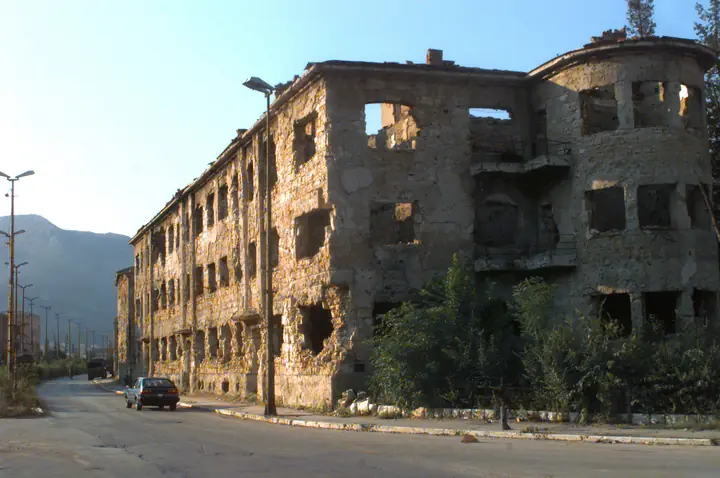
The 1990s in Mostar: the two sieges, the front line on the Bulevar, the fall of the bridge, and the city that came after.
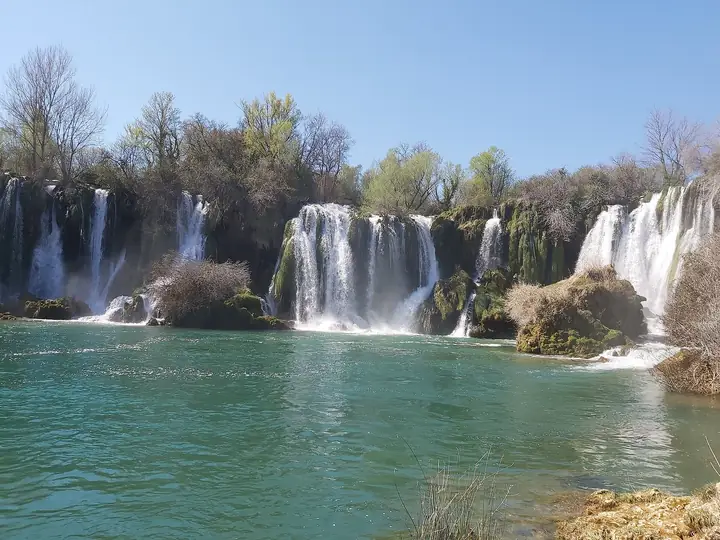
The Kravice waterfalls, the Blagaj dervish house and the stone town of Počitelj in one day, in your own air-conditioned car.
Choose a day and book in one step. You get a confirmation by email straight away.